Back
Back
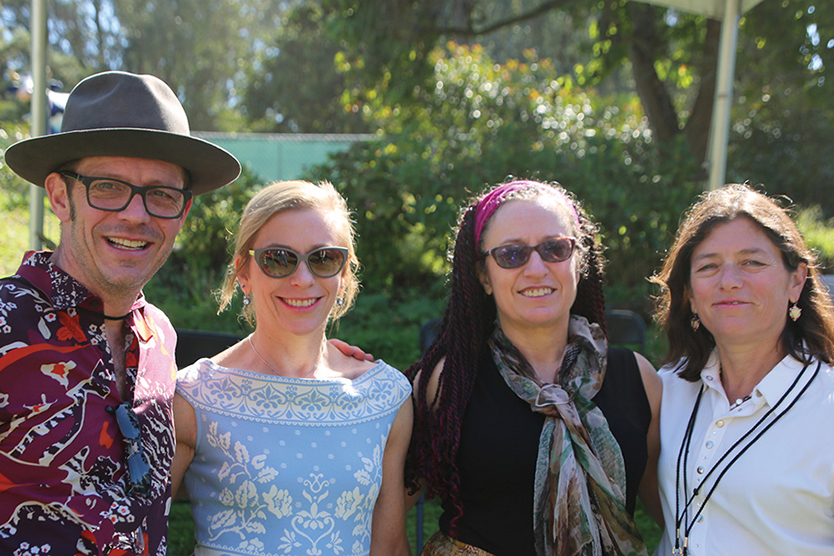
To earn tenure at UCLA, scholars must demonstrate excellence in teaching, service and research. However, conducting research requires funding, which can be difficult for early-career faculty to obtain.
Warren and Chris Hellman discovered this challenge when their daughter, Frances, became an assistant professor of physics at UC San Diego in 1987. Fortunately, the Hellmans were already lifelong philanthropists with experience in bringing people together, enriching their communities and championing education. They knew just what to do.
In 1995, a year after Frances received tenure, her parents funded the Hellman Fellows Fund to support junior faculty as they launched their first scholarly projects. In the beginning, the Hellmans planted the roots of their philanthropy at UC San Diego and Berkeley. Then, UCLA received $1.25 million from the Hellman Fellows Fund and announced the first Bruin cohort of Hellman Fellows in 2011. In 2020, the Fund made a major gift to extend the program’s legacy, endowing the Society of Hellman Fellows program at all 10 UC campuses, with an additional $7.5 million in funding directed to UCLA.
To date, more than 200 UCLA faculty members have been awarded research funds, thanks to two generations of Hellmans. With this vital support, scholars, artists and scientific investigators make meaningful contributions to their fields, build credibility, become more competitive for additional sources of funding and advance in their careers.
What is more, this generosity extends beyond the original recipients, as many UCLA Hellman Fellows hire undergraduate and graduate students as research assistants, extending opportunities that encourage another generation of academics.
Read on to learn about some of the new knowledge that UCLA faculty members have created thanks to their membership in the Society of Hellman Fellows.
Sriram Sankararaman, Computer Science/Human Genetics, 2017–2018
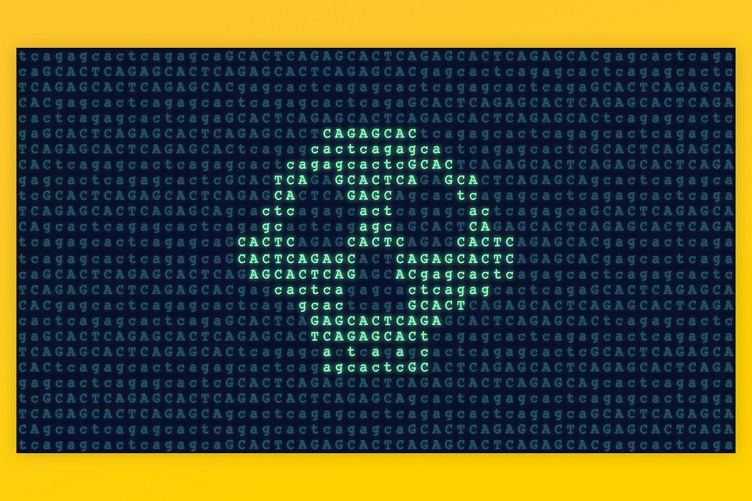
A member of UCLA’s faculty since 2015, Sriram Sankararaman is a professor of computer science, human genetics and computational medicine at the UCLA Samueli School of Engineering and Applied Science. With support from the Hellman Foundation and other funders, he and his lab team leveraged precise statistical methods to closely examine the effects of Neanderthal DNA, while excluding the effects of modern human genes. They found that although Neanderthals became extinct more than 40,000 years ago, their DNA continues to play a significant role in our immune systems, metabolism and development. In 2023, the Associated Press reported on the team’s findings and other similar discoveries in an article about our Neanderthal genetic legacy.
“Our work provided new insights for evolutionary biologists who are looking at how the echoes of interbreeding with archaic humans may have both beneficial and detrimental consequences,” Sankararaman says. The methodological breakthrough achieved by Sankararaman and his team also illuminated missing links in the human genome, opening a new line of research dedicated to detangling the strains of ghost DNA, as UCLA Magazine explored in 2024.
Jennie Grammer, Education, 2017–2018
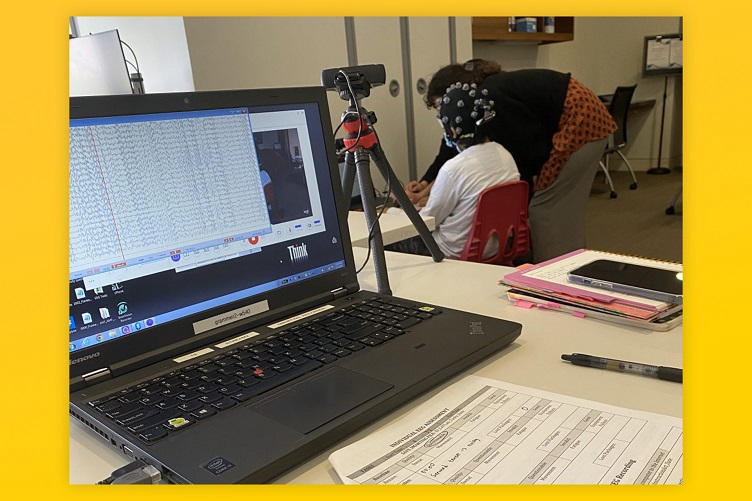
Jennie Grammer, associate professor of education at the School of Education and Information Studies at UCLA, examines how experiences at school influence students’ rates of learning and development. As a Hellman Fellow, Grammer received funding that made it possible for her to use mobile electroencephalogram (EEG) devices to record students’ brain activity in the classroom, collecting data from real-world situations, rather than from experiments in a lab. In an article titled “Improving attention and focus in classroom environments,” Grammer and her team discuss how they found that clear guidance and instruction given to elementary students in the classroom benefits independent work and attention.
As technology advances and the effects of learning loss due to COVID-19 linger, Grammer’s research supports teachers in adjusting their educational methods to keep students focused on learning. Grammer attributes her first publication in Science of Learning, as well as a study in Mind, Brain, and Education, to the Hellmans’ generosity.
Additionally, the research findings generated with the Hellmans’ initial support positioned Grammer’s collaborators to receive grants from the National Institute of Mental Health in educational neuroscience. “In the end,” Grammer says, “a number of other research teams have benefited as well.”
Smadar Naoz, Physics & Astronomy, 2017–2018
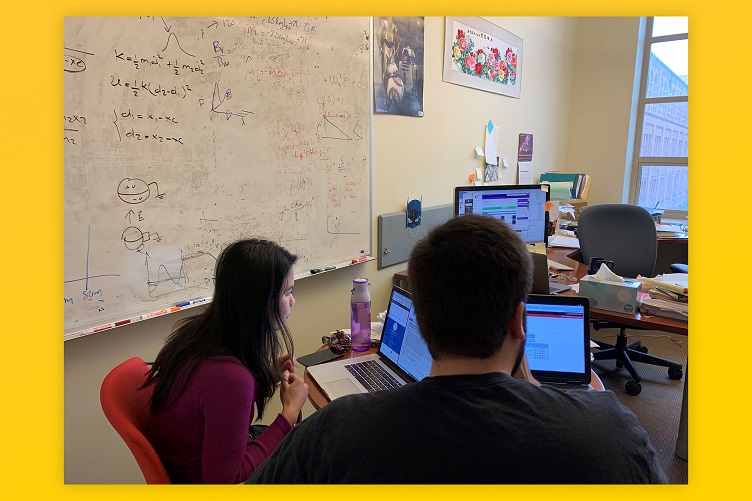
Physics and astronomy professor Smadar Naoz of the UCLA College studies the collisions of black holes, early star formation and how stars interact at the center of galaxies. With the support of the Hellman Fellowship, Naoz says her team “explored how these extreme environments can naturally produce black hole and neutron star mergers.”
The Hellmans’ support funded several publications that demonstrate how “galactic centers can be factories for dramatic events — from supernova explosions to black hole mergers that send ripples through space-time.” In 2020, Naoz earned the Helen B. Warner Prize for Astronomy “for her many contributions to theoretical astrophysics, especially her influential and creative studies in cosmology and dynamics.” A UCLA Newsroom article titled “UCLA experts: Comprehending the cosmos” featured Naoz, whose work potentially holds the answers to how black holes merge, alongside additional Bruin faculty studying the fabric of the universe.
Jonathan Kao, Electrical and Computer Engineering, 2019–2020
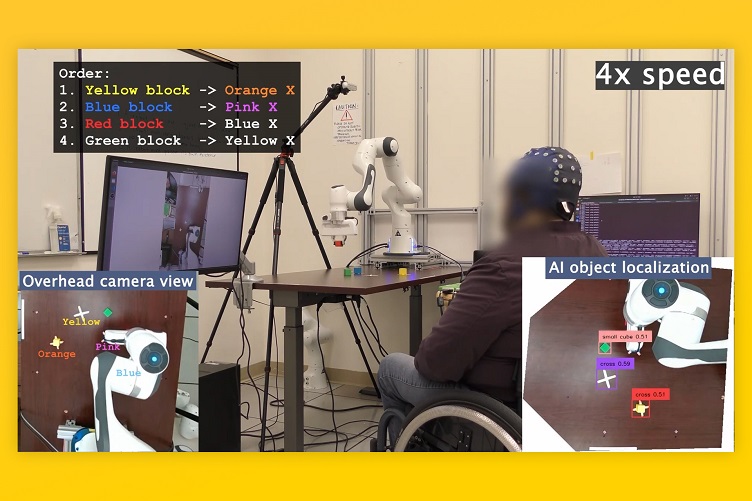
Jonathan Kao, an associate professor of electrical and computer engineering at UCLA Samueli School of Engineering, investigates ways that brain-computer interfaces (BCIs), when combined with artificial intelligence, can assist people with paralysis. As a recipient of the Hellman Fellowship, he and his team conducted experiments in which an AI copilot detected participants’ brain signals and translated their intended movements to a robotic arm for task assistance.
Kao explains in a recent UCLA Newsroom article that the idea for BCIs paired with AI stems from his team’s belief that technology should be non-invasive and high quality. The goal is to empower people with movement limitations to regain autonomy for simple tasks. In 2021, the Journal of Neural Engineering published his paper titled “An artificial intelligence that increases brain-computer interface performance,” in which his team explored AI’s potential to aid participants with physical tasks such as typing. Findings from this study earned Kao the NIH Director’s New Innovator Award, a $2.4 million grant, which drove additional studies and publications in both Nature Machine Intelligence and Nature News.
Miriam Marlier, Environmental Health Sciences, 2021–2022

Miriam Marlier, assistant professor of global environmental change at UCLA Fielding School of Public Health, is motivated to make a difference as “wildfires are increasing in frequency and severity in the Western U.S. and other fire-prone regions around the world.” Funded by the Hellman Foundation, Marlier conducted research using satellite remote sensing and atmospheric modeling datasets to monitor how prescribed fire and other land management strategies affect the severity of wildfires, including the smoke pollution they produce.
Early in her career, Marlier primarily worked on fire and pollution research abroad but, leveraging the Hellmans’ support, she transitioned to studying the health and safety of local California communities and also extended opportunities to UCLA students seeking applied training in the climate and health fields. Marlier presented her findings on who is impacted by wildfire smoke exposure and what can be done to mitigate the resulting health risks at the 2023 Research, Innovation & Impact Day at the UCLA Fielding School of Public Health. In early 2025, Marlier and other scientists collaborated on an analysis of the air quality in Los Angeles County after the wildfires of January 2025.
David Clewett, Psychology, 2022–2023
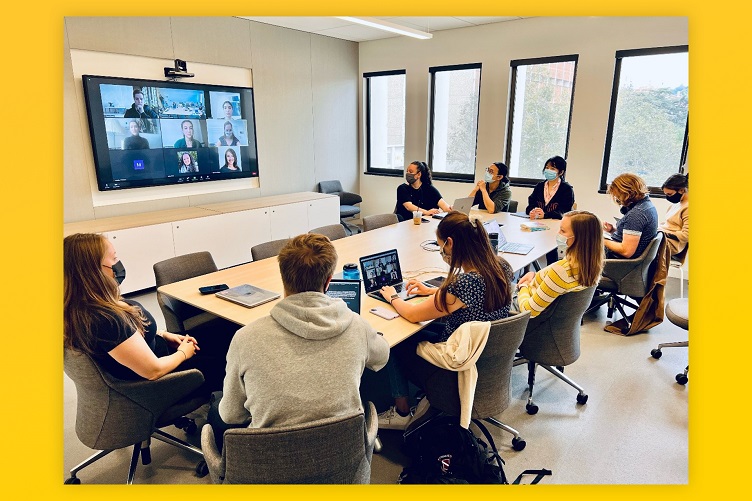
With the support of the Hellman Foundation, Professor David Clewett used functional magnetic resonance imaging (fMRI) to uncover how listening to music evokes emotions that, in turn, affect the way the brain stores and organizes memories.
His study, published in Nature Communications, used custom musical compositions to manipulate the emotional states of human subjects. Looking at the brains of healthy young adults, Clewett and his team observed how meaningful memories are created and stored when participants experience certain emotions. “This funding laid strong groundwork for my lab’s neuroscience research, providing the necessary resources and pilot data to support translational studies on memory and arousal dysregulation in post-traumatic stress disorder, commonly referred to as PTSD,” Clewett says.
In the course of the team’s investigation, they identified a cluster of neurons in the brainstem, known as the locus coeruleus, that distinguishes one memory from another. By locating the part of the brain that contributes to memory formation, the findings suggest that supporting the locus coeruleus may be the key to treating PTSD and other memory disorders such as Alzheimer’s disease.
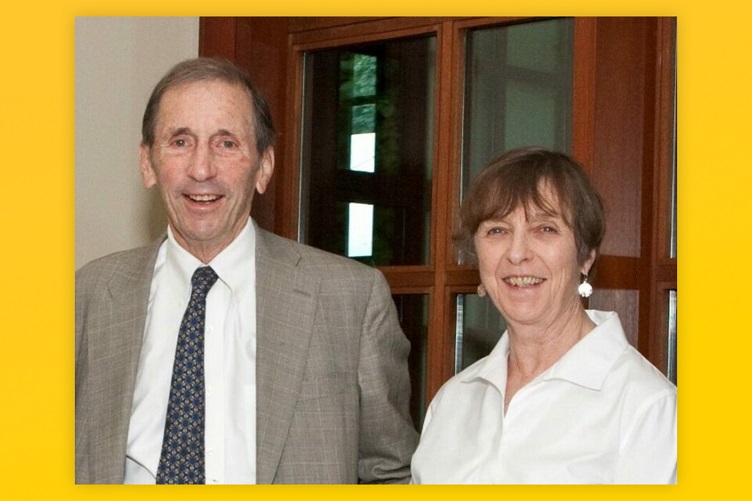
The late Warren and Chris Hellman, philanthropists from the San Francisco Bay Area, chose to invest in early-career UC faculty who stand out for their creative projects and innovative research. The Hellmans’ giving was inspired by the early career of their daughter, Frances, who began her academic career as an assistant professor at UCSD, became a full professor there, and then advanced to serve as the chair of the department of physics and the dean of the division of mathematical and physical sciences at UC Berkeley.